

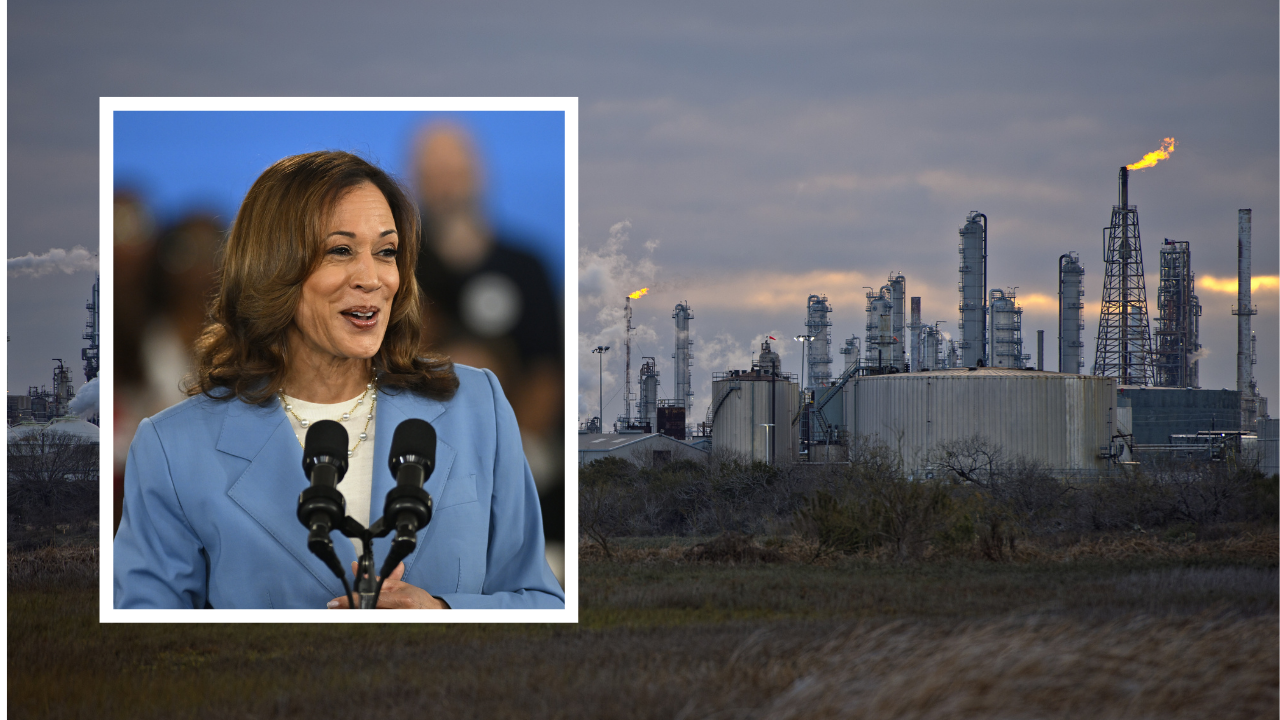
Vice President Kamala Harris is under scrutiny for her previous calls for oil companies to be held accountable for their role in climate change while now touting the increase in domestic oil production under the Biden administration. During her 2019 presidential campaign, Harris advocated for the Department of Justice to investigate oil companies for profiting off pollution. However, she has shifted her position since becoming the Democratic nominee, now emphasizing the importance of reducing dependence on foreign oil by increasing domestic production.
In a CNN segment that highlighted Harris’s flip-flop on the issue, the vice president defended her stance during the presidential debate against former President Trump, stating that the administration has invested in a clean energy economy while also increasing domestic gas production. Harris’s campaign did not respond to inquiries about her previous calls for investigating big oil companies for pollution, leading to further criticism of her changing positions on the issue.
While some Democratic allies, such as Gov. Tim Walz, have echoed Harris’s recent stance on the issue, the U.S. Oil and Gas Association (OGA) has criticized her newfound support for domestic oil production, stating that Harris had nothing to do with the industry’s growth. Representatives from the Independent Petroleum Association of America (IPAA) also weighed in, supporting a strong U.S. oil and natural gas industry as beneficial to the economy and essential for meeting the country’s energy needs.
Despite her past comments against fracking, Harris has shifted her stance during the current election cycle, now expressing support for the method after previously stating she was in favor of banning it. The change in position on fracking, along with her evolving views on domestic oil production, has drawn criticism from both sides of the political spectrum, with some accusing Harris of playing politics with critical environmental issues instead of taking a consistent stand.
Harris’s recent statements on the increase in domestic oil production have been met with skepticism and backlash from industry organizations such as the OGA and the IPAA. While acknowledging the importance of energy production, these groups have highlighted the strict environmental and safety standards adhered to by U.S. oil and natural gas producers, emphasizing the need for a robust domestic industry to maintain energy independence and economic stability.
In conclusion, Vice President Kamala Harris is facing criticism for her changing positions on environmental and energy policies, particularly her shift in stance on oil production and fracking. While Harris has defended the administration’s investment in a clean energy economy, critics argue that her previous calls for holding big oil accountable for pollution are at odds with her current support for domestic production. The debate surrounding Harris’s flip-flop on these issues highlights the complexity of balancing environmental concerns with economic realities, and underscores the challenges faced by policymakers in navigating these competing interests.