



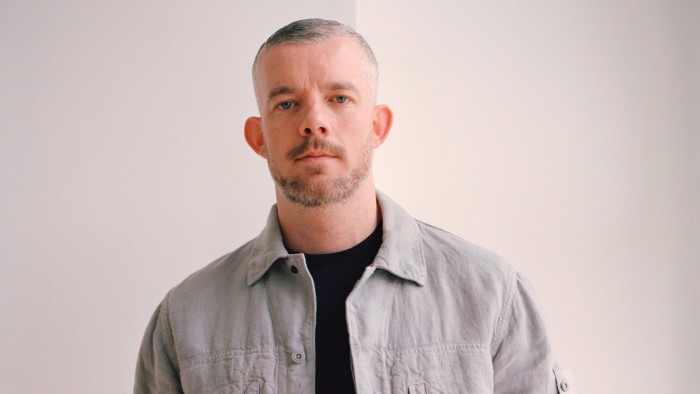
Summarize this content to 2000 words in 6 paragraphs in Arabic Outside Stockwell Tube station in south London, there’s a mosaic mural of Jean Charles de Menezes, the Brazilian electrician who was shot and killed by police 20 years ago. Beneath de Menezes’ smiling face is a single word in stark white capitals: “INNOCENT”.By the time the mural was unveiled in 2010, that innocence had been firmly established. The 27-year-old had been wrongly identified as a member of an Islamist group that had tried to set off explosive devices on buses and trains on July 21 2005, two weeks after the deadly terrorist attacks of July 7. A chaotic Metropolitan Police surveillance operation had led to a blameless man being followed and killed. And yet a sense that de Menezes might have somehow invited his fate has lingered on in the collective memory.“Everybody I speak to who remembers that time believes that he did something to confuse the police,” says the actor Russell Tovey, who plays the Met’s then deputy assistant commissioner Brian Paddick in Suspect, a four-part dramatisation of de Menezes’ killing. “Why was he running? Why was he vaulting the barriers? Why was he wearing a bulky coat?”Those rumours, repeated in early media reports, were pieced together from the accounts of bewildered bystanders who had witnessed the police storming through the station. An inquiry by the Independent Police Complaints Commission, released in 2007, concluded that the Met had not only failed to correct those inaccuracies, but in some cases had helped to spread them. CCTV footage from the station would show de Menezes picking up a free newspaper, walking calmly to the ticket barrier and heading down the escalator. He was wearing a denim jacket. He was not carrying anything. All of this is faithfully replicated in the series, with Brazilian actor Edison Alcaide playing de Menezes with a gentle grace in the glimpses we see of his everyday life, and in the awful moments before his death.For Tovey, Suspect felt like a way to reestablish the truth of what happened. “We’re in a post-truth world now, where there are alternative facts, and whoever’s the loudest or has the most followers, their truth is bona fide,” he says. “I think we have to dramatise these stories because that seems to be the way that truth gets discovered. You look at the Post Office scandal [told in the hit 2024 series Mr Bates vs The Post Office], or Adolescence. People learn from and are educated through art more than they are through government rhetoric. So we have to keep telling these stories.”Paddick, whom Tovey plays, was one of the first to challenge the official Met narrative about what was known about de Menezes, and when. He said publicly that Ian Blair, then commissioner of the Met, must have been aware that an innocent man had been killed within hours of the shooting; after all, Paddick himself had been told. The IPCC ultimately endorsed Blair’s version of the timeline. Paddick, feeling sidelined after being moved into a “non-job”, resigned from the force in 2007.Tovey messaged Paddick after he got the part to say he’d be playing him. The pair met at the House of Lords, where Paddick now sits as a non-affiliated member. “We discussed the specifics of the case, but his memoir covers that story,” says Tovey. “I wanted to see what he was like as a person, the way he held himself, the way he drank his coffee. And the big note that he told me is that all through his life everyone said that he sat like he had a rod up his back. You can read everything on my face, whereas he’s just stoic, gives away nothing.”He plays Paddick as he sees him: “Heroic, an inspiration.” Blair, who also sits in the Lords, gets less favourable treatment, as does Cressida Dick, who oversaw the pursuit of de Menezes before rising to become commissioner of the Met in 2017. “I’m really hopeful that it makes a big impact politically, that it makes a big impact socially and that people are held accountable,” says Tovey.The actor, 43, speaks with fluency and urgency about almost everything, but a recurring thread is art and its transformative possibilities. “Noël Coward said: ‘Work is more fun than fun’,” he says. “And I get such joy from what I do.” For seven years he’s been co-hosting a podcast, Talk Art (24 seasons and counting), which aims to demystify the world of visual art through conversations with artists, academics, collectors and curators. “Art has never been given to us,” he says. “It’s never been given to me. I had to fight for it, you know?”Growing up in Essex, his school years were about “survival”. “I was very cheeky, naughty, always trying to make everyone laugh, then getting kicked out of the class and going, ‘I really wish I was back in there, hearing about the war poets’. But if I’d showed any interest in poetry, then I’d have been called gay or a boffin or I would have been targeted.”At 18, he was stabbed in the head, in an unprovoked attack on a train. “For years and years I would cross the road if there was a group of lads,” he says. “I remember being in the bar that night, and there was always a sense that at any moment someone might bottle you for no reason. That was the culture in Romford — there was just violence in the air, constantly.”Every night and every weekend Tovey went to drama club. “The theatre has been the thing that’s changed my life,” he says. “That’s where I met my tribe and realised it was OK to have interests outside what we as young men were told we could be interested in.”He was working from his teens, but his career really took off in 2004 with Alan Bennett’s The History Boys, playing the hardworking, underestimated student Rudge, taking him from the National Theatre to Broadway and beyond. “The script is the thing,” he says. “The way I can get into a script is with dialogue — I know within the first two pages if I’m in. The characters have to have emotional depth, they have be put under pressure to be something or do something, there has to be momentum within them.”Tovey came out early in his career and says playing gay characters brought all those considerations into sharper focus. “Those roles had to feel like they weren’t just there for the sake of it,” he says. “There had to be a reason, there had to be something that was changing.”He took a part in the 2014 HBO series Looking, a gorgeous, grounded portrayal of gay lives in San Francisco. The show was cancelled after two seasons. “It was genius and it was before its time,” says Tovey. “There was so much less queer content then. I think people were wanting catchphrases or sass . . . We’d come off the back of Will & Grace, which was obviously impactful to me, was incredible representation. I loved Will & Grace. But this show was such a polar opposite energy-wise and tonally.”If Looking didn’t find its audience then, “what’s exciting about TV is that it lives”, says Tovey. “There are whole new generations that have found it and are like, ‘where’s this been?’. Because it feels so contemporary.”He feels something similar about Suspect, that it might have the power to reawaken the public imagination. “Jean Charles de Menezes isn’t just a name and a victim. He was a living, existing person with thoughts and feelings who was loved. I’ve walked past that mural outside Stockwell station hundreds of times, and I always stop and always look at it. I hope that people will go and pay respects to him, and his life.”‘Suspect: The Shooting of Jean Charles de Menezes’ is on Disney+ from April 30Find out about our latest stories first — follow FT Weekend on Instagram and X, and sign up to receive the FT Weekend newsletter every Saturday morning