



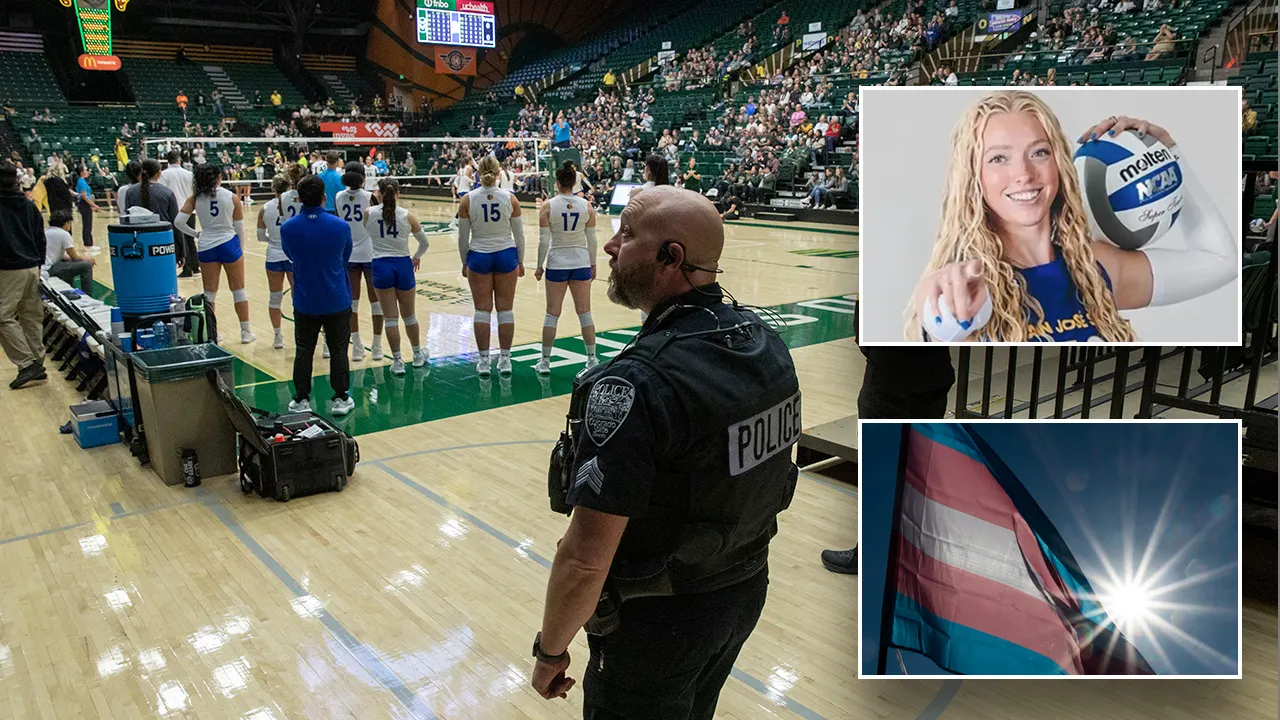
Brooke Slusser, a college junior and volleyball player for San Jose State, found herself in a dangerous situation after receiving a threatening message warning her teammates to keep their distance from her during a game against Colorado State due to potential harm. The threat was the first of its kind for Slusser, who hails from a town in Texas known for its conservative leanings and low crime rate. However, the landscape was different in California, where transgender inclusion in college sports was allowed. Slusser and her teammates were unaware that one of their players, Blaire Fleming, was a transgender female until joining a lawsuit against the NCAA following the discovery.
The lawsuit, led by former college swimmer Riley Gaines, thrust the San Jose State volleyball team into a national debate over gender identity rights and women’s sports sanctity. Slusser’s safety was a concern, prompting the team to bring in armed security to protect against potential threats. The increased security measures came after several forfeits by opposing teams, amplifying attention on the program. The heightened security was evident when the team arrived at Colorado State for a match, with a significant police presence to ensure the safety of the players. Slusser, in particular, was targeted with threats on social media, leading to a need for protection both at home and on the road.
The university’s police department was involved in evaluating and addressing concerning communications, but the identity of the person who threatened Slusser remains unknown. San Jose State confirmed ongoing police protection for the volleyball team for future matches, providing a sense of security for Slusser in light of the dangers associated with her stance on transgender inclusion in women’s sports. The program faced challenges as they prepared for upcoming matches, with threats and opposition from opposing teams adding to the tensions surrounding the controversial issue.
The upcoming match against the University of Nevada, Reno, posed a potential security risk, as Nevada players expressed their intent not to participate in the game due to the contentious debate on transgender inclusion in sports. The Nevada team sought to cancel the match, highlighting the divisive nature of the issue at hand. Despite the challenges faced by Slusser, Fleming, and their teammates, they continued to navigate the difficult road ahead, bolstered by the presence of police protection during games and road trips. The uncertainty surrounding their safety and the intense scrutiny of their choices underscored the complex nature of the debate.
The University of Nevada’s decision to uphold the match despite the players’ intentions revealed the legal complexities surrounding transgender inclusion in women’s sports, as state law protected gender identity as a form of discrimination. The potential showdown between the two teams in a Sun Belt battleground state served as a symbolic battleground for the larger debate unfolding in the sports world. Slusser’s experiences shed light on the challenges faced by athletes who take a stand on controversial issues, highlighting the importance of safety measures and support in navigating such situations. As the team prepared for future matches, the ongoing security concerns underscored the need for a proactive approach to ensure the well-being of all players involved.